Friday, January 21, 2011

Raw Herbs


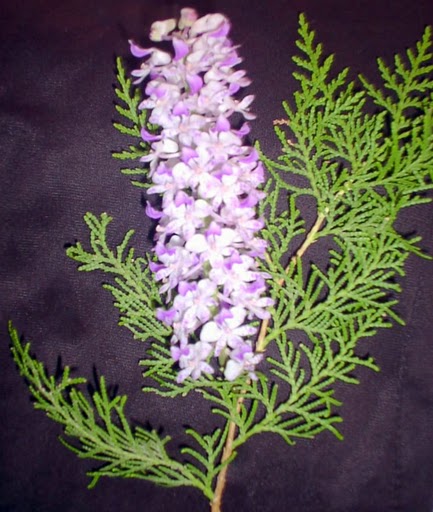
During my recent trip to Banda , District Banda Uttar Pradesh which also known as one of the area comes under Bundalkhand. Their are many type of raw herbs which are
grown wild in and around this area. Some of the local people are selling these herbs which they used to collect from the forest area of this region.
As I asked them as to how they get the knowledge about the use of these herb, I was told by this young man that his father is Vaid ( Ayurved expert ) and he got the knowledge about the use of herbs for various ailments from his father as this tradition goes on in their family.

Some of the herbs which he is prescribing for various ailments are very effective and many local villagers used to buy these herbs from them and they are quite effective and are curing many poor people.
I also purchased certain herbs for my sister who is suffering from some kind of allergy in a hope that it can be cured one day and she will get relief within two months time. I am hopeful that she will get the relief within two months time and i will let u know about it soon.
Raw herbs are gift to mankind from the All Mighty.

Friday, November 26, 2010

Lotus flower from Himachal Pradesh

Lotus Flower in full Bloom:
During my trip to Himachal Pradesh in search for herbs, I came across a village having ancient pond on my way to Salli village near Dharamshala, in Himachal Pradesh. I was fascinated by the site of this pound as it was full of Lotus flowers. I requested a village boy to pluck one of the flower for me and hence I clicked it for you to view. Its quite big and beautiful.
The Lotus flower in our ancient scripts is known as a divine symbol, its unfolding petals suggests the expansion of our Soul; the growth of its pure beauty from the muddy  water -origin -  holds a benign spiritual promise. 

Wednesday, October 20, 2010

sisal Plant

Sisal plant grows wild in Himachal Pradesh and it is used by
local people / farmers as a rope.

Tinospora cordifolia Herb


Tinospora, Guduchi; Gurich :

An extensive climber with corky, grooved bark also known as Giloy is used in skindisease; gout; rheumatism; arthritis; sprue; piles; in Ayurvedic treatment.
It is wild grown in Kangra District of Himachal Pradesh in abundance and is of very good quality having good medicinal properties in it. During one of recent trip I collect this herb from one of our fields and make a bundle of this herb and kept it in one of our store for drying it in shade.

Terminalia Chebula Herb


Chebulic Myrobalans or Harar is used in constipation; cough; skin disease; asthma; dysentery;Anaemia; Headache; diabetese; in the Ayurvedic treatment in India.

for quality raw herb do write to us

Sunday, October 17, 2010

Mucuna pruriens Herb


Common Name:Kapikacchu; Kaunch; Velvet Bean, Cowhage, Cow-itch, Buffalo bean, Atmagupta,

Mucuna pruriens - recognized as an aphrodisiac herb in Ayurveda treatment. It has been shown to increase testosterone levels, helps deposition of protein in the muscles and increase muscle mass and strength. The extract is also known to enhance mental alertness and improve coordination.
Mucuna is also useful in increasing sperm count in men and ovulation in women. It prevents male and female sterility and acts as a nervine tonic.
Mucuna pruriens is being cultivated by an Ayurvedic expert in Himachal Pradesh. For raw herbs do write to us at:
http://www.konarkcrafts.com/album.php?AlbumName=Herb&MenuNum=3

Sunday, August 15, 2010

Rare flower from Himachal


Rare Flower from Himachal:
It was in the month of June 2010 -one fine morning during my morning walk in the forest cum garden area in lower
Dharamshala, Himachal Pradesh suddenly I saw a beautiful flower in its full bloom on this plant. Though their are many plants in and around that area but this flower was blooming only on one plant.
I had not enough information about this rare flower and plant.
If anybody have information about this plant / flower and would like to share it for our information and knowledge please share it here.

http://www.konarkcrafts.com/album.php?AlbumName=Herb&MenuNum=3

Tuesday, April 6, 2010

Pickles from himachal


Mixed Pickle: Made from green chillies; Cauliflower;
Carrot; Mango and Lemon Added with Haldi; Rai; Salt and Spices.
Made by the enterprising women Co-operative Society known as Samridhi - a village women organisation in Himachal Pradesh under the brand name - CHANGAR'S. Apart from pickle these village women organisation also make Amla Candy; Mango Chutney; Garlic Pickle; Bamboo Pickle; Bitter Gourd Pickle; Myrobalan Pickle (Harad ); Citrus Candy; and Honey.
For details and further information pls write to us at:http://konarkcrafts.com/contactus.php
We would like to promote this village women organisation who has started from the scrap and now it has become a very big organisation in Himachal Pradesh and we need your coloboration
for the betterment of the village women.

Tuesday, March 16, 2010

Rhododendron flower in full Bloom


Rhododendron is a Greek name which means rodo, "rose", and dendro, "tree" is a genus of flowering plants in the family Ericaceae. It is the national flower of Nepal and state flower of Uttrakhand, India.

Rhododendron flowers are in full bloom in the Kangra valley of Himachal Pradesh during the month of March / April every year. This year the flower blossomed a month earlier in the area may be due to the changing pattern of climate - the global warming.

The flowers are being collected from the trees grown wild at an altitude varies roughly between 1400 and 3000 meters by the local villagers, as a means of their lively hood. Rhododendron flowers are collected and dried in a dust free environment on the roof tops and then sent to the city market for its medicinal use.

Rhododendron Juice is refreshing and has great medicinal value. It is of red color just like the flower, and is beneficial in improving the blood hypertension. According to the research. Rhododendron juice is useful in relieving pain and also it relaxes the body. It is very useful in diarrhoea and dysentery. If you are looking for Rhododendron do write to us as we can arrange and supply the quality herbs.

Do write to us at: http://www.konarkcrafts.com/herbs_rawherbs.php


Sunday, January 31, 2010

LUFFA SOAP - Luffa accutangula


Luffa or Loofa Soap

The Luffa acutangula or Luffa aegyptiaca is commonly known as ridged gourd and is called Tauri Turai or Tori in Hindi, Jhinga in Bengali, Gisoda or turiya in Gujarati, Beera kaya in Telugu, Heeray kayi in Kannada, peechinga in Malayalam, Dodaka or Ghosavala in Marathi, Peerkankaai in Tamil, Susemi in Korean, Hechima (ヘチマ) in Japanese, Koinkon in Yoruba, si gua in Mandarin Chinese language. Luffa or Luffa is traditionally grown in India and has been used by the village masses since ancient times.

Soap is used to clean ones body. We use it to wash our hands; in the shower; - it makes the dirt and germs go away. Luffa or Loofa has been added to our handmade herbal soap. It is gentle enought to scrub your back, hand, legs as it is smooth as well as tough. It is used for dry skin and removes the dead skin from our body.

We have come up with three main varieties of handmade herbal soap with loofa or luffa. It is used for exfoliation for dry skin. We have the Loofa or Luffa soap in three varities and colors. These are :

      1. Luffa soap in Honey with Minty flavor

      2. Luffa soap in Lemon grass flavor.

      3. Luffa soap in Neam & Alovera
        Our Loofa soap is excellent for sloughing away the dead skin cells for a glowing complexion. It is completely natural and eco friendly.

        Loofah soap makes a good gift. But please note that lufffa soap can be scratchy also when not fully wet – so do not use it on your face or other sensitive area.

For details and your order please write to us or contact us at the following: http://konarkcrafts.com/index.php

Friday, January 22, 2010

Ayurvedic Treatment - Consultation

Konark Crafts has joined hands with SHRI MAHAVIR AYURVEDIC SHODH SANSTHAN in the field of Herbs and herbal medicine. Dr. RADHA KANT VATS who is the founder of the Sansthan is dedicated to his profession and had cured many patients who got relief from the complicated diseases.
Some of the successful treatment of Dr Vats are as follows:-
A : BONE & JOINTS PROBLMES:
01: Chronic and Complicated Rheumatoid Arthritis
02: Chronic Osteoarthritis
03: Osteoporosis (softness in bones)
B : DISK PROBLEMS :
01: Disk Degeneration
02: Slip Disk
03: Cervical Spondilites
04: Disk Problems with Nerve compression
C: RESPIRATORY TRACT PROBLEM:
01: Chronic Asthma (Allergic Bronchitis)
02: Chronic Bronchitis
03: Wet Cough (coughing with more sputum)
04: Dry Cough
05: Sore Throat

D: GASTRO INTESTINAL PROBLEMS:
01: Oesophagitis
02: Hiatus Hernia
03: Chronic and Complicated Hyper Acidity
04: Chronic Intestinal Colic
05: Chronic Amoebisis
E: KIDNEY PROBLEMS:
01: Kidney Failure
02: Chronic Urinary Tract Infection (UTI

F: LIVER PROBLEMS:
01: Enlargement of the Liver
G Diseases of Nervous System
02: Paralysis / Hemiplegia
03: Facial Paralysis.
H: PARALYSIS:
If fresh case of Paralysis comes in few hours of the attack it can be cured in few days. Our Ayurvedic treatment is four times more effective and faster than the modern medicine.
I: SKIN PROBLEMS:
01: Sun Burn
02: Skin Allergy
03: Psoriasis
04: Dermatitis
05: Eczema
06: Pimples
Patients can send us their symptoms of any kind of disease and get the Ayurvedic treatment as well
We at Konark Crafts can supply you good quality raw herbs procured from the Hills of Himachal Pradesh and Uttranchal. for Details please contact us

Monday, November 9, 2009

MANIMAHESH -THE ABODE OF LORD SHIVA -


LORD SHIVA - OM NAMO SHAVAI:
This is an old photo of Lord Shiva created by unknown artist some seventy year ago. It was bought by my Grand Father some where in the year 1945 from Amritsar and was installed in our old House at Dharamshala, Himachal Pradesh.
I was fascinated by this photograph right from my childhood and seeing Lord Shiva sitting in a meditating position some where in the Himalayas. I used to think of this place as the imagination of the artist.
But during my first visit in the year 1991 to Manimahesh - the artist creativity as shown in this photograph seems to be real and true. During my trek to Manimahesh I found that the typography of the area of Dhanchow and the waterfall is almost similar as depicted in this photograph. The Artist might have got the idea and thought process while making this photograph of Lord Shiva from this place. The water is gushing out with loud and thunder force from two sides of the mighty rock (like shivlingam) in the centre. The cold and clear water like milk of Bhujala river (khad) is moving with mighty force and creating a thunder naad (sound). One can see the big and beautiful rainbow near the waterfall. The area was lush green with full of Herbs such as jurenia Macrocephala; betula utilis and many other rare herbs yet to be identified.

During those 20 to 25 years and even before that the trek to Manimahesh was very harsh and difficult. People were generous, simple and helpful. The pilgrimage used to stay at Local (Gaddi tribal ) people houses who used to feed them with food and shelter free of cost. We have to carry our tents and food articles with us. Only two or three free services (langars) were there. The road from Barhmour to Hadsar was very narrow; dangerous and unmetaled. Only few local jeeps used to ply on this route. One has to trek from Barhmour to Hadsar (10 kms) generally. Later on the road was metaled. There were only few people who used to visit Manimahesh just to pay their humble tribute and reverence to Lord Shiva and take a holy dip at the Manimahesh Lake on the auspicious day of Radha Ashtami. Now-a-days there are lots of free service (langars) are organised by the devotes from Punjab; Jammu and Himachal for the pilgrimage of Manimahesh.

It was in the year 1995 that their was a sudden cloud brust in and around Manimahesh. It was said that lot of foul smelling water was gutted from the lake with mighty force in the Bhujala river. It was during that time the topography of the Dhancho area as well as the waterfall changed. . It was during that year the water fall changed its fall direction and view. Now one can view the flow of water fall from one side more and that mighty rock had been broken. The flow of water was obstructed rocks crushed in between the water fall. Its a true saying that Nature changes its course or direction in a decade.

I pay my humble reverence and bow into the feet of Lord Shiva at Manimahesh by posting this old and rare photograph for devotes of Lord Shiva and also for those who are eager to visit - Manimahesh - The Abode of LORD SHIVA - in the near future so that they can respect the sanctity and holiness of this place. By preserving and maintaining a clean and green environment in the Himalayas without disturbing its topography and ecology is the only true tribute to Lord Shiva in this present day modern world. OM NAMO SHAVAI

Wednesday, September 16, 2009

URTICA DIOICA - RAW HERB


Urtica dioica : – Also known as - Stinging Nettle; Bigsting Nettle; Common Stinging Nettle; Kazink; Nabat Al Nar; Isirgan;Ortiga mayor; Bichu Butti;
Stinging Nettle is used in the home as a herbal remedy and nutritious addition to the diet throughout the world. It is also commonly used in Kangra, Kullu and Lahaul Spiti districts of Himachal Pradesh. A tea made from the leaves has traditionally been used as a blood purifier and cleansing tonic. The whole plant is antiasthmatic, antidandruff, astringent, depurative, diuretic, galactogogue, haemostatic and a stimulating tonic.

The fresh leaves of nettles have been rubbed or beaten onto the skin in the treatment of rheumatism. This practice, called urtification, causes intense irritation to the skin as it is stung by the nettles. It is believed that the formic acid from the nettles is believed to have a beneficial effect upon the rheumatic joints. For medicinal purposes, the plant is best harvested in May or June as it is coming into flower and dried for later use. Its leaves are dried for further use. A tea is made from the dried leaves is warming on a winters day. A bland flavor, it can be added as a tonic to tea.

Stinging Nettle is used throughout the world for allergic, aches,, asthma, rhinitis bacterial infections, baldness, bleeding, bronchitis, bruises, burns, cancer, catarrh, chest problems, childbirth, constipation, cough, dandruff, diarrhea, dyspnea, edema, elephantiasis, epilepsy, fever, gout, hair loss, hemorrhages, hypertension, insanity, iron-deficiency anemia, kidney stones, leprosy, liver diseases, lung problems, menstrual disorders, neuralgia, obesity, osteoarthritis, pain, paralysis, prostate disorders, rheumatism, skin diseases, sprains, stomach problems, swelling, tumors, uterine disorders, , urinary problems,urinary insufficiency, worms, wounds, and to promote perspiration.

We arrange and collect Urtica dioica from the wild from the Himalayan range of Uttranchal and Himachal Pradesh. Its leaves are collected from the wild and dried properly and packed according to demand. For further details and your orders do writes to us or contact us at the following: http://konarkcrafts.com/contactus.php

Monday, September 14, 2009

MANIMAHESH - IN SEARCH FOR THY SELF.

Posted by Picasa
MANIMAHESH - YATRA- The abode of LORD SHIVA - known as the destroyer of everything. This photo is taken during one of my 12th visit to Manimahesh (view at Gauri Kund). Every year people mainly from Punjab; Jammu; Himachal along with other places of India visit this place during the auspicious days - i.e. from Janamashtami (Lord Krishna's birthday) to Radha-ashtami day. During this period there are lots of Langars (free service) by the devotees of Lord Shiva who serve food; medicine; and shelter with full dedication and devotion.

Manimahesh situated at an altitude of about 13500 feet lies in Brahmaur Tehsil of Chamba District of Himachal Pradesh, India. From Delhi one can go to Pathankot by train / bus /air; then reach Chamba ( aprox 700 kms from Delhi). From Chamba to Barhmour one can go by private vehicle or HRTC buses. This distance is about 65 kms and time taken is approx 4 to 5 hours as the road is very narrow sometime it is steep along with river Rawi. The view on the way is mind freshening.

Brahmaur - once the ancient capital of the Chamba rulers before the 8th century A.D. was the main center of activities in the princely state of Chamba. It was during those times the temple of CHOURASI (84) were built. The main temple of Manimahesh built in shikhara style was dedicated to Lord Shiva.

On reaching Brahmaur one can stay at Mountaineering Gust House/ Tourist Bungalow run by Himachal Government. Dormitory and rooms are available if you reach their before 4pm. The hills of Barhmour are full of flora and varieties of Herbs are grown wild in this area. At Chourasi one should not forget to visit the temple of LORD DHARAMRAJ - the LORD OF DEATH. It is believed that this is the place where one has to pass through after death. It is here that Lord Dharamraj's Court pronounce his justice according to the KARMA (deeds) of the departed Soul. The LORD GANAPATI; GODDESS LAKSHANA DEVI AND LORD NAR SIMHA (Lord Vishnu) statues are worth seeing and magnificent. The huge SHIVA LINGAM situated in the main temple of Chourasi which is surrounded by very old and tall pine trees. Their is a lifesize bronze statue of NANDI (Bull) in front of the temple of Manimahesh - Lord Shiva.

During the festival season in the month of August / September every year this area is full of activities of local people; devotee's of Lord Shiva and sadhus (saints). From Chourasi (Brahmaur) a visit to Brahmani Devi temple (4kms ) is must for every traveler of Manimahesh. The view of Budhal valley - Mountain range is worth viewing and mind freshing.

From Brahmaur one has to go to Harsar or Hadsar the confluence of two rivers (10 kms by road). Here during old time people of the surrounding areas used to immerses the ashes of their dead one (bones) on the confluence point of the two rivers. From Harsar the real and tough trek starts. It is about 16 kms trek climbing higher and stiff mountain step by step besides river BHUJALA. Local people cover this distance in about 5 to 6 hours but people like us who came from the Metros cities 9 to 10 hours. It is better to halt at Dancho ( the water fall) about 7 kms from Harsar. Next day then one can start early morning and can reach the base of Kailash (Gauri Kund) and can stay near the Holy Lake of Manimahesh.

Taking a holy dip in the ice water lake of Manimahesh is a memorable experience. The weather is very unpredictable. The dance of Lord Shiva -TANDAV - is the true manifestation in the form of Weather in this area. If you are lucky enough by getting the nice weather at night then watching the star at night is a memorable experience. The view of Mount Kailash gives you a sense of pleasure which only an individual SOUL can understand and feel the vibration of that INVISIBLE. It seems that one of the major dream of your life is achieved after viewing the peak of MOUNT KAILASH. YOU CAN FEEL AS IF YOU ARE IN HEAVEN AND YOU ARE THE PART OF THIS UNIVERSE. IT IS ONLY HERE YOU REALIZE THAT YOU ARE CLOSER TO THY SELF - THE IMMORTAL SOUL.

If your mind and body is strong enough one can venture and trek to KAMAL KUND (Lotus shaped Lake - about 4 kms steep trek) near the base of Mount Kailash. This area is full of rare Herbs and one needs lot of knowledge and stamina to identify the proper herb growing in a natural environment as it is a GIFT OF GOD to mankind. WE MUST BE THANKFUL TO THAT ALL MIGHTY WHO HAS BESTOWED UPON US HIS BLESSING IN THE FORM OF HERBS. We must preserve them and use them properly. OM NA MO SHIVA

We are committed to supply pure herbs. We can collect and cultivate the herbs through contract farming for our buyers according to their specifications. We engage the local people who are trained and are aware of the conditions in which herbs are found in their natural habitat.

The herbs when collected are dried in shade, cleaned and stored in good hygienic conditions. At the time of supply / delivery the herbs are cleaned manually, inspected and packed in poly bags / gunny bags as per demand for export/local delivery. For further details do write to us at http://konarkcrafts.com/index.php

MANIMAHESH - KAI LASH- THE TEMPLE OF GOD
No man made Temple is required.
Only thy SOUL - Mani Mahesh
Thought (Mind) is thy Lord.
Manimahesh Yatra - A journey to Heaven.

Wednesday, September 2, 2009

CONSULT OUR DOCTOR (Ayurvedic Medicine & Herbs)


Dr. Radha Kant Vats a saint and devotee of Lord Krishna, is a practical example of Karam Yogi –a Saint in this present life and a dedicated physician by profession practicing since 1992. He has authored few books like – Shri Shuk Prakash – a bibliography of Sangitacharya Shri Shukdev Dasji a famous saint and Shri Acharya Rahasya – brief profile of mystic spiritual teachers (Achrayas) of Nimbark Sampardaya.
He treats his patients with much concern and dedication and has been able to cure many complicated patients who had lost hope in life. He lives without pleasure of senses. Simple living and high thinking is his motto. Research in Ayurveda and social services are the only occupations in his life. He had specialized and done lot of research work in treating complicated cases of Disk Degeneration; Chronic renal (kidney) failure; Neurological disorder and skin problems of various kinds. Many patients had been benefited from his medication.
If your near or dear one have any medical problem and had tried all the sources then try once the Ayurvedic treatment from Dr. Radha Kant Vats. Please send us your problem in details (medical reports if any) so that it can be cured very soon with very nominal charges for medicine and certain precautions about food habits.

Shri Mahavir Ayurvedic Shodh Sansthan based at Delhi with the main aim of undertaking research work in the field of Classical Ayurvedic Medicine and treatment for the betterment of mankind. Founder: Dr. Radha Kant Vats B.A.M.S. from Kanpur University with the blessing of Gurudev, his Highness Holy Jagadguru Nimbarakcharya Shri Shri Ji Maharaj founded Shri Mahavir Ayurvedic Shodh Sansthan in the year 1999. Since then the Sansthan is also engaged in other activities such as – GOUSHALA (Cow Service); Remedies for a number of clinical conditions like Rheumatoid Arthritis; Paralysis; Allergy; Kidney failure etc. and research work on various Herbs- its effects and usefulness in Ayurvedic treatment. Dr. Vats is one of the consultant and guiding force for Konark Crafts Herb Division.

For further details please contact us at: http://www.konarkcrafts.com/contactus.php

Posted by Picasa

Thursday, August 27, 2009

EMBLIC MYROBALAN / AMRTAPHALA / AMALA:

Emblic Myrobalan / Amala / Amrtaphala:


Posted by PicasaPhyllanthus emblica Linn.( Fam. Euphorbiaeae ) EMBLIC MYROBALAN :

Emblic Myrobalan - Amla, Aonla in Hindi; in Sanskrit it is known as Amrtaphala, amalaka, Dhatriphala; in English - Emblic Myrobalan.

Amalaki ( Dried Fruit) consists of dried fruits of Embilica officinalis Gaern. Syn. Phyllanthus embilica Linn (Fam. Euphorbiaceae); mostly collected in winter season after ripening and in Kashmir in summer, a small or medium sized tree, found both in natural state in mixed deciduous forests of India ascending to 1300 m on hills; cultivated in gardens, home yards or grown as a road side tree.

Its fruit contains protein; carbohydrates; vitamin C; Tannins; After drying it contains Gallic acid; Glucose. It taste is Sour, Astringent and sweet. It is used in: Diabetes, Headache, Hysteria; Jaundice; Eczema; Piles; cold; Scurvy. It is one of the main ingredients of Cyavanaprasa. For your requirement do write to us at: http://konarkcrafts.com/contactus.php


Acacia concinna - Shikakai


Posted by PicasaACACIA CONCINNA - Merrue MIMOSAE : SHIKAKAI
A spreading spiny shrub, branches are slender and long. Leaves pinnate compound. Fruits abode fleshy, beaked and constricted. Taste: Bitter, acidic.
Used in: Cough; Jaundice; Vomiting; Liver disease; Lice and Dandruff, Good in hair wash .

SAPINDUS MUKOROSSI - SOAP NUT / Reetha


Sapindus mukorossi / REETHA

Soap Nuts or Reetha grow on trees in the Shivalik Hill and the outer Himalayas of Himachal Pradesh; Uttranchal; Haryana and Jammu & Kashmir. In local indian dialect Soapnut is also called as reetha / ritha; doadni, doda and dodan. The shell of Ritha contain saponin, a natural detergent and the active ingredient in soap.

Ritha flowers during summer, which are small and greenish white. The fruit appears in the month of July/August and ripens by Novermber/December. These are solitary globose, round nuts – 2 to 2.5cm diameter, saponaceous, fleshy and yellowish brown in color. The seed is enclosed in a black, smooth and hard globose endocarp. The fruit is collected during winter months for sale in the market as soap nut / retha.

This dried fruit of Soap nut is most valuable part of the tree. Its fleshy portion contains saponin, which is good substitute for washing soap. It is used in the preparation of good quality shampoos, and detergents. It can be used as a natural shampoo for washing ones hair and woolen cloths. The hairs will get a silky shine and special vitality and won't be greasy so fast. The foam production is less than the conventional shampoos.

Soap nut / Ritha / Sapindus mukorossi is also used for its medicinal value in Ayurvedic, Unani and Tibetan Systems of medicine. It is used for treating diseases like epilepsy, constipation, common cold, pimples, nausea, etc. It is allergy free and good for sensitive skin including eczema and psoriasis.

We are procuring good quality Soapnut from the region of Himachal Pradesh and Uttaranchal. We can supply either half shells crushed or in powder form, packed in 500 grams or 1 kg in PP Bags or Cotton bags with 20 kgs carton box. We can supply you good quality of sapindus mukorossi in crushed form. We are also making reetha seed jewelery. For your orders and further details please write to us at http://www.konarkcrafts.com/contactus.php

Monday, July 20, 2009

DRY BLACK MUSHROOMS ( MORCHELLA ESCULENTA )


DRY BLACK MUSHROOMS ( MORCHELLA ESCULENTA )

SEASON OF PLUCKING FROM WILD FORESTS IN HIGHER ALTITUDE
( BETWEEN 5000 FT. TO 8000 FT ) IN THE HIMALAYAN REGION DURING
THE MONTH OF MARCH / APRIL . IT IS DRIED IN NATURAL PROCESS
( SUN DRY) AND PACKED IN POLY BAGS AS PER REQUIREMENT.

SUPPLY TIME FOR DRIED MORCHELLA IS : APRIL TO MAY.
IT IS DRY VEGETABLE VERY GOOD FOR HEALTH
IT IS ALSO KNOW AS DRY BLACK MUSHOOM

Wednesday, July 15, 2009

GERANIUM CULTIVATION: ESSENTIAL OIL

BOURBON GERANIUM: Essential Oil
Geranium - A perennial aromatic shrub originated from South Africa, Egypt, and Morocco. It was introduced into France; Italy and Spain in the 17th Century. In India it was introduced by the two French people in the Southern part of India in the early nineteenth century (1900 -1915). In India two main verities are grown - Algerian or Tunisian and the BOURBON (Reunion). Geranium Bourbon is the most important of the Geranium Oil and infect, one of the main essential oil used in perfumery. It has a smooth but powerful and persistent odor of rose-geranium, green-leafy and with a fruity, minty background. Traditionally Geranium is used for healing of wounds; ulcers and skin disorder and in the treatment of diarrhoea, dysentery and colic. In aromatherapy its oil is used for it antibacterial and insecticidal properties.

We are growing geranium in our fields and can cultivate Geranium in bulk through contract farming located in the Kangra district, (near Dharamsala) of Himachal Pradesh as per requirement and can produce one of the high grade Geranium Oil. For further details do write to us at :http://konarkcrafts.com/contactus.php